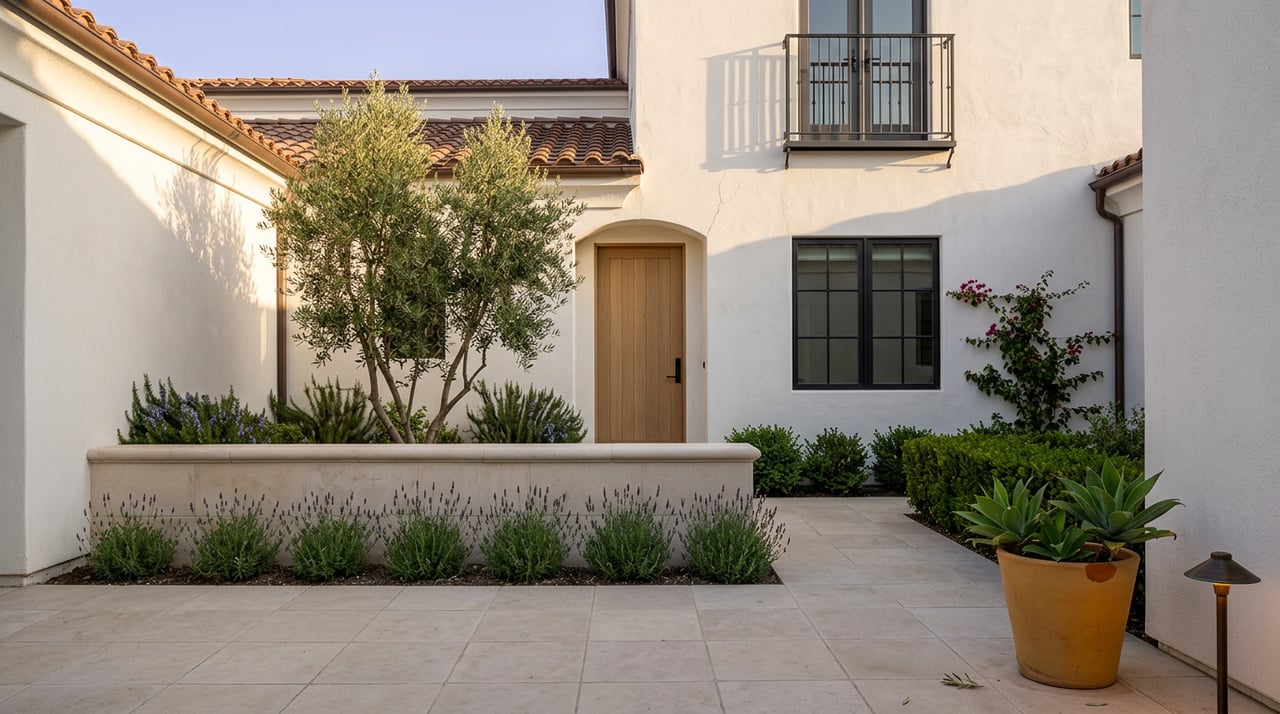
Ask a buyer touring an attached home in Dana Point what number worries them and most say the same thing: the monthly HOA fee. Ask the same buyer about the balcony inspection report and you usually get a pause, then a guess that it is a 2026 problem still working its way through the pipeline.
That guess is backwards, and the gap between what buyers assume and what the law actually says has become one of the more consequential blind spots in South Orange County condo transactions this year.
The deadline you heard about is not the one that applies
California passed two related laws in 2019 after balcony failures elsewhere in the state exposed how little routine inspection multifamily buildings actually got. One law, Senate Bill 721, covers rental apartment buildings. The other, Senate Bill 326, covers condominium associations. They sound like the same rule wearing two names. They are not, and the difference matters enormously if you are shopping for a condo along the bluffs above Capistrano Beach or in one of Dana Point's older attached-home tracts.
SB 721's apartment deadline got a genuine, legislated extension. Assembly Bill 2579 pushed the rental-building inspection deadline out to January 1, 2026. That extension made headlines, and it is where most of the "2026 deadline" chatter comes from.
SB 326 never got that extension. The condominium deadline, codified at Civil Code section 5551, was January 1, 2025, and it stayed there. Attorneys have had to publish plain-language corrections after seeing the two deadlines confused in print, including a fact sheet from MBK Chapman walking through exactly this error. A construction-law explainer from Bay Legal PC makes the same point: the apartment extension does not touch the condominium statute at all.
The apartment deadline got a one-year extension to January 1, 2026. The condominium deadline did not. It passed on January 1, 2025, and it is still sitting there for any HOA that missed it.
If you are evaluating a condo or townhome purchase in Dana Point right now, that deadline, already a year and a half old, not some future one, is the relevant fact.
Why the miss went unnoticed for so long
Civil Code section 5551 does not attach a direct fine to a missed inspection, and there is no state agency actively auditing HOAs for SB 326 compliance, since the California Department of Real Estate does not enforce the Davis-Stirling Act and local building departments have no jurisdiction over an HOA's internal inspections. So an association that quietly skipped its 2025 deadline faced no immediate consequence, and plenty of boards treated the silence as permission to keep waiting.
That changed on January 1, 2026. Senate Bill 410 amended Civil Code section 4525, the statute that governs the standard resale disclosure packet every California condo seller must assemble, to add the most recent SB 326 inspection report to that packet. A title company's own client guidance puts it plainly: HOAs must now include those inspection reports in the documents delivered to buyers, and 805 Title warns that missing or outdated documentation can delay escrow or expose sellers to nondisclosure liability.
In other words, a compliance gap that produced no consequence in 2025 became a disclosure item in every Dana Point condo sale the moment 2026 started. Buyers who never thought to ask about balconies are now handed the answer, or its absence, as a matter of routine.
| Law | Who it covers | Deadline | Status as of August 2026 |
|---|---|---|---|
| SB 326 (Civil Code §5551) | Condominium HOAs, 3+ units, wood-supported balconies and decks | January 1, 2025 | Passed, never extended |
| SB 721 / AB 2579 | Rental apartment buildings | January 1, 2026 | Passed earlier this year |
| SB 410 (Civil Code §4525) | Adds the SB 326 report to the resale disclosure packet | January 1, 2026 | In effect now |
What a missing report actually costs a buyer
An absent or stale inspection report is not just an awkward silence in the disclosure file. It can reach into financing. A California compliance guide aimed at listing agents warns that an incomplete or unfavorable SB 326 report can get a project flagged as "non-warrantable" by Fannie Mae and Freddie Mac, which restricts the conventional financing available on every unit in that building, not just the one you are buying. A separate legal analysis from Bay Legal PC reaches the same conclusion, noting that associations with unresolved disclosure problems face lender refusals during refinancing and buyer hesitation during resale, on top of the underlying repair exposure itself.
That risk compounds with ordinary escrow timing. A standard inspection contingency runs about seventeen days, but delivery of the required HOA documents follows its own separate clock, and a packet ordered late pushes back your contingency-removal dates whether you are ready or not. The safest posture for a buyer is to have your agent request the full HOA disclosure file, balcony report included, the moment your offer is accepted rather than waiting for it to arrive on its own schedule.
The second number nobody asks about
The balcony report answers one question: is the structure sound. It does not answer a second, equally important question: can the HOA actually afford to fix what the report finds. That answer lives in the reserve study.
California requires every common interest development to conduct a visual inspection of its major components at least once every three years under Civil Code section 5550, and to disclose the resulting percent-funded figure annually under section 5565. Reserve professionals and lenders commonly treat 70 percent funded or higher as a healthy target, with communities under 50 percent facing near-certain special assessments, loans, or dues increases, while other reserve specialists put the truly weak threshold at under 30 percent funded. California law sets no legally mandated minimum. What matters is not a single headline percentage but the trend behind it and whether the funding plan already accounts for the SB 326 findings.
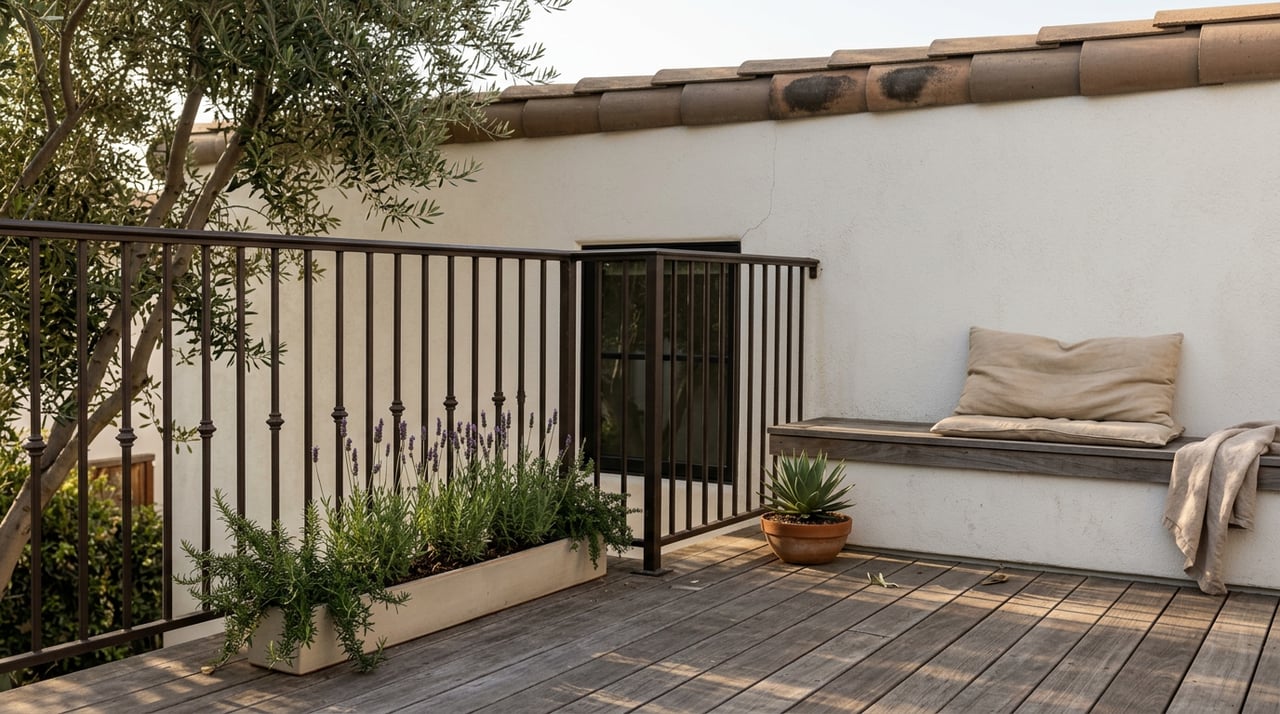
That distinction carries extra weight in Dana Point's older attached-home stock. Complexes built in the late 1970s and early 1980s, and bluff-top buildings with wood decks facing decades of salt air, are precisely the kind of construction the balcony law was written for. A clean reserve study paired with a stale or missing SB 326 report tells you the association has been funding for problems it has not yet identified. That combination deserves a harder look, not a faster close.
Ownership structure decides whether any of this even applies
Not every attached community in Dana Point is automatically covered. SB 326 applies to condominiums as defined under the Davis-Stirling Act, where the association owns the structure. It does not apply to planned developments, where each owner holds fee title to their own structure and lot, even if the homes sit close together behind a shared gate. The dividing line often comes down to how the governing documents define a unit's boundary: if it stops at the unfinished interior wall surfaces, the structure is common area and the HOA is on the hook; if the boundary extends to the exterior surfaces, the owner is responsible and the HOA-level law may not reach that building at all.
This is not a detail to guess at from a listing sheet. Two attached-home communities that look identical from the street can sit on opposite sides of that line. Before you assume a report exists, or assume one is required, ask the property management company directly which category the specific building falls under.
What to ask before you remove contingencies
- Request the current SB 326 inspection report directly from the HOA or its management company rather than waiting for it to surface in the standard disclosure packet.
- Ask when the reserve study was last updated and what the percent-funded figure shows, since Civil Code section 5550 sets a three-year update cycle as the outer limit.
- Read the last twelve months of board meeting minutes for any discussion of a pending or recently approved special assessment.
- Confirm with your lender, before you write the offer, whether the specific project currently qualifies for conventional financing or carries any warrantability flags.
- If the report shows immediate-threat findings, ask what has already been repaired versus what remains on the association's to-do list.
FAQ
Does this apply to single-family homes inside a gated community? No. SB 326 is specific to condominium ownership structures with three or more attached units and wood-supported exterior elements above six feet. Detached single-family homes inside a gated HOA are governed by different maintenance rules entirely.
If the HOA never completed its inspection, does that kill the deal? Not automatically, but it changes the negotiation. A missing report is now a disclosure item in its own right, and a buyer's agent who catches it has real leverage to ask for price adjustment, a credit, or a firm commitment from the HOA on inspection timing before contingencies come off.
Does a passed inspection mean the HOA is financially healthy? No. The inspection and the reserve study answer two separate questions. A structurally sound building can still sit inside a poorly funded association, and a poorly funded association is where special assessments come from.
Is the inspector shortage a real bottleneck? It has been. Assembly Bill 2114 recently expanded who can legally perform these inspections to include licensed civil engineers alongside architects and structural engineers, which should ease some of the scheduling backlog that built up after the original 2025 deadline.
If you are weighing a condo or townhome purchase anywhere in Dana Point, from the bluffs above Capistrano Beach to the older tracts inland of the harbor, these are exactly the documents I pull and read before we ever discuss an offer number. Reach out to Adam Nelson and let's go through the HOA file together before you fall for the view.